
Heat sealers use a heated element to fuse thermoplastic materials, creating airtight, durable seals for packaging. Available in various sizes and styles — from simple hand or foot-operated sealers to shrink machines and heat guns — they’re used across industries like food, medical, and retail to keep products fresh, sterile, and protected. Some models include a cutting blade for trimming excess material or forming custom bag sizes.
Impulse Heat Sealers
Impulse heat sealers only apply heat when the heating jaws are pushed down onto the area to be sealed and the set time is reached. This type of heat sealing is usually used for fusing thermoplastic materials that don’t need high temperatures to form a seal. Impulse heat seals multi-layered thermoplastic and foil tubing to form a moisture barrier and airtight pouches. These are the safest heat sealers as the element is only hot when the heating jaws are closed. Burns are more likely to be avoided.
Impulse heat sealers are more economical to use as the power usage is intermittent and the sealing jaws are heated instantly, rather than requiring time to heat up.
Constant Heat Sealers
Constant heat sealers provide a high continuous heat in the sealing jaws. The temperature is more controlled in these types of heat sealers. Thermoplastic or poly-coated materials that are suited for constant heat need to be thicker and able to handle high temperatures without becoming weak or melting.
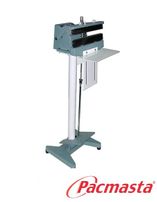
Constant Heat Roller Sealers
Seals Polyethylene or Cellophane by rolling the Teflon coated wheel along the material to be sealed. These portable sealers can make a round oval or square textured seal and are easy to use. Has an adjustable temperature range from 30-220 degrees. Is ideal for sealing plastic bags.
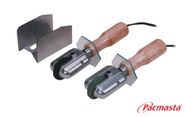
Band Sealers
Band Sealers come with a conveyor belt for a faster packing operation. These machines often have accessories such as an alphanumerical embossing wheel. Temperature controls let you set the heat levels and wider conveyor belts can be installed.
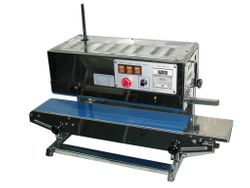
Hood Shrink Sealers
Hood Shrink Machines apply heat to shrink a plastic film around a product in one step. Hood shrink machines cover the item and then send it through a heat tunnel or oven to shrink the wrap.
This process is often done by automated equipment, but semi-automatic and manual shrink wrap machines are also available. The shrink and cooling times are programmable according to the items and shrink material being used.
Shrink-a-pack
A heat machine that shrinkwraps packages with the included heat gun and a film dispenser attached. This heat sealer is good for fresh produce and odd-shaped items such as hampers. For use on PVC, polypropylene or polyolefin shrink film. Great for small businesses and retailers such as chemists or newsagents who need to bundle items.
This heat sealer is also good for covering Christmas hampers, perishables and non-perishables.
Automatic heat Sealers
Automatic Impulse Heat Sealers are designed for the continuous sealing of thermoplastic films such as polyethylene and polypropylene. Once the correct control settings have been programmed, consistent seals are maintained automatically, making each seal consistent.
A Constant Automatic Heat Sealer is excellent for sealing poly cello films, humidity-proof cellophane film, polyethylene film, aluminium foil coated bags and gusset bags. Pacmasta offers mesh or straight-line texture of heater jaw. The straight-line texture is especially recommended for the health care industry.
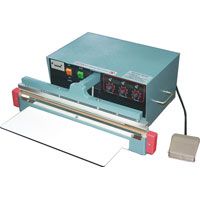
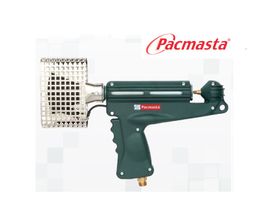
Gas Shrink Gun
Gas Shrink Guns are used with shrink polythene pallet covers, pallet bags, polythene sheeting, shrink films. Its a fast, cost-effective and highly protective method of dispatching goods.
Seal Strength
Seal strength relies on the joining strength required for the object being packaged. Seal integrity relies on the level of minute breaks in the seal or tiny missed areas of seal that microbes can travel through and contaminate goods. Seal integrity is paramount for the medical and pharmaceutical industry. For proper sealing of goods, it is very important to factor in the materials, heat seal times and the requirements of individual items.
The element in a heat sealer will eventually burn out. Luckily they are easy to replace with readily available spare parts and repair kits.